changement climatique
Energy: public authority and local renewable production
Public energy authority, local renewable production, district heating networks and social electricity pricing.
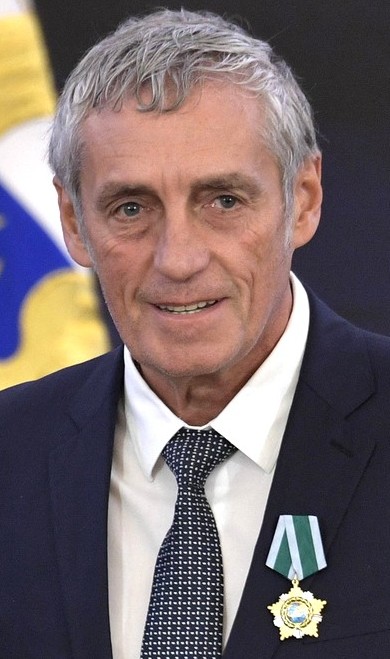
Head of list: Philippe Saurel
Philippe Saurel is a well-known political figure in Montpellier:
During his mandate, he promoted a municipal policy combining local security, urban development, and the implementation of mechanisms sometimes perceived as innovative and others as political communication techniques (illustrated by certain citizen engagements). The citizen movement #JeSuisUnDesDeux notably marked this period in connection with issues of soft mobility (cycling and cycling infrastructure) in the city.
In June 2025, Philippe Saurel announced that he would be the local leader of the Utiles movement (Ultra-marins, Territoires, Indépendants, Libertés, Écologie et Solidarité), a trans-partisan political movement stemming from the LIOT parliamentary group. He has since officially declared his candidacy for mayor of Montpellier for the 2026 municipal elections.
In his statements, Saurel emphasized that he intends to form a new and disinterested team, locally rooted. He focuses on a trans-partisan approach, open to all sensibilities except extremes, with the aim of gathering citizens around concrete projects for the city.
In July 2025, Philippe Saurel sent a letter to the prefect to alert on the financial situation of Montpellier Méditerranée Métropole, judging the situation "calamitous" and criticizing the current management of debt and expenses, which, according to him, compromise the financial balance of the community.
This stance is part of a strategy of targeted criticism towards the current municipal team and highlighting his own political clarity as the municipal elections approach.
Philippe Saurel has long defined himself as an elected official without a strict partisan label, positioning himself on a trans-partisan line. He publicly supported Emmanuel Macron from the 2017 presidential campaign and, on that occasion, participated in part of Macron's campaign team while remaining independent of La République en Marche. Although he did not join the presidential party, several local supporters from the presidential majority preferred to support him rather than the candidate invested by LREM during the 2020 municipal elections in Montpellier, which testifies to a political proximity with the center and the presidential majority on certain axes, without constituting a formal adherence to a national party.
During the 2020 municipal elections, Philippe Saurel failed to remain mayor:
Several points marked his time at the head of Montpellier:
The #JeSuisUnDesDeux movement is a citizen initiative born in Montpellier around cycling mobility issues, notably from associations and collectives demanding better integration of facilities for bicycles and soft mobility in the city.
This movement has often served as a media barometer of local tensions between different visions of public space, sometimes approved or instrumentalized by deputy mayors or municipal officials during Saurel's mandate. It illustrates a civic and activist dynamic around mobility, which Saurel had to manage as mayor — which is part of the evaluation of his record and the local public debate.
Public energy authority, local renewable production, district heating networks and social electricity pricing.
No to the CSR incinerator. Reinforced sorting, recycling centres and increased collection in dense urban areas.
Renovated facilities, enhanced parks. Wider access to culture and sport for children and disadvantaged groups.
School support in all neighbourhoods, parenting assistance (psychologists, educators, paediatricians) and extracurricular sports and cultural activities.
Renovating the university hospital, reorganising the emergency services and improving accessibility, improving the welcome for families.
Improving the quality of life for people with disabilities.
Business support, one-stop shop for small and medium businesses (administrative processes, financing, premises), low-carbon industry development with the state and apprenticeship expansion.
Support for traders, craftspeople, self-employed professionals, market halls and markets.
Public agricultural authority to supply local organic produce, provision schools, the university hospital and student refectories, and distribute organic food baskets to pregnant women.
Strengthened and better-trained forces, specialised municipal units (drug trafficking, violence against women, antisocial behaviour), improved cooperation between municipal, national and private security, reinforced cycling patrol, anti-terrorism and public health emergency measures, video surveillance, 24/7 monitoring.
Effective public lighting to reduce falls and accidents.
Creation of a Housing Agency, support for homeless people and development of affordable social housing.
Urban renewal programme raised to 1 billion euros of investment, climate adaptation and participatory urban planning to calm the city.
New neighbourhood-voted traffic plan with adapted routes and frequencies to reduce congestion, improve mobility and maintain free public transport.
Ensuring shared use of public space, particularly for pedestrians.